China’s Henan bank scandal not just a financial crisis, it may be a lasting political calamity: analysts
https://www.scmp.com/news/china/politics/article/3185182/chinas-henan-bank-scandal-not-just-financial-crisis-it-may-be?module=perpetual_scroll_0&pgtype=article&campaign=3185182
China’s Henan bank scandal not just a financial crisis, it may be a lasting political calamity: analysts
- China’s central government must find ways to promptly repay the depositors or risk the effects of damaged public confidence, say scholars
- Depositors’ lost US$6 billion is reminder to authorities that advanced technology alone cannot maintain stability, says academic


TOP PICKS


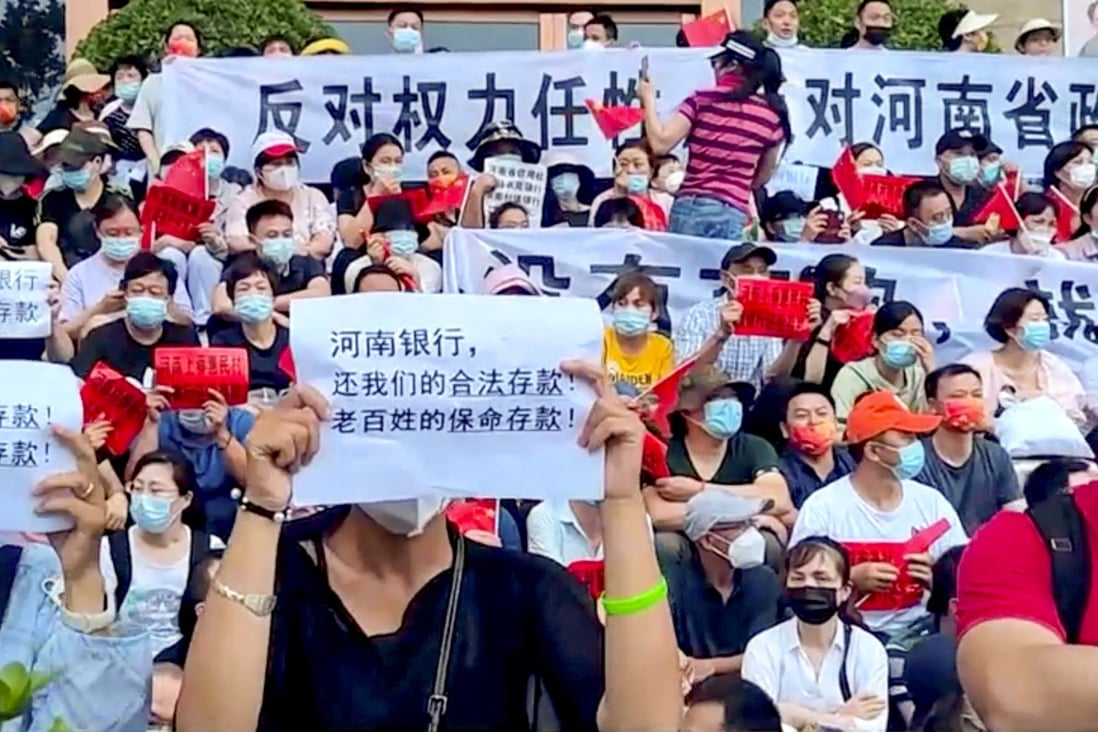
The Henan bank scandal, in which 40 billion yuan (US$6 billion) in deposits disappeared, is more than a Chinese banking crisis – it is a political crisis that could undermine people’s confidence in local governance and also other local banks, according to analysts.
The blow to public confidence in financial stability and the government’s ability to protect their legitimate interests could be a long-term issue, unless the central government can find ways to promptly repay the depositors, they say.

Dali Yang, a political scientist at the University of Chicago, said the protest in Henan was a major political crisis because of its scale and severe nature.
“This is a credibility crisis involving not just a few rural banks in Henan province but a large number of grass-roots account holders across the nation. The economic loss is enormous,” Yang said.
“From a Marxist framework, finance and economic risks are essentially political risks and that’s why many are concerned with containing the problem from spreading further.”
The timing could not be worse. Since April, the scandal has continued to snowball to a massive scale mere months away from the keynote Communist Party’s national congress, when Chinese President Xi Jinping is expected to start his third term as party secretary.
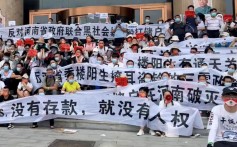
Images and videos of more than 1,000 angry depositors – who could not withdraw money from the four affected rural banks – protesting outside the Henan branch of the banking regulator have been circulating on social media, despite China’s censorship efforts.
Worse still, in a widely circulated video clip of a protest in early July, protesters were shown being beaten up by people in white clothes. So far, the assailants have not been identified.
The image of the local government was further tarnished after numerous reports said protesters had their health codes – which determine where people in China can go – turned red even though they were neither infected with Covid-19 nor close contacts of cases.
The authorities admitted that more than 1,000 people had their health codes turned red illegitimately. They blamed technical glitches and denied the health code error was intentional.
“Henan government’s approach to the unrest has been following a primitive social stability method aiming at handling the people rather than the issue itself by hiring white-clothed personnel. It created an ugly public relations calamity,” said Alfred Wu, associate professor at the National University of Singapore’s Lee Kuan Yew School of Public Policy.
Another scholar based in Shanghai said the scandal dealt a more serious blow to public confidence than other financial frauds because many previous financial scandals, such as the P2P lending scandals, were investment products and investors understood risks were involved. But this time bank customers’ deposits were frozen.
“The banks were approved by the banking regulator and deposit is different from investment. It has a big impact on public confidence,” said the scholar, who declined to be named because he did not have permission to speak to the media.
In recent months, central government officials have repeatedly told local cadres to make sure there is a “favourable atmosphere” – a euphemism for social and political stability – including keeping Covid-19 at bay, ahead of the party congress.

Chen Yixin, secretary general of the Central Political and Legal Affairs Commission, the top party agency in charge of law and order, told a conference in April that the law enforcement agencies and local governments should resolve all political and social risks to create a climate of peace and prosperity ahead of the congress.
Wu said he expected the central government would spin a narrative that made the Henan crisis a problem within the banking sector and the Henan provincial government.
However, the scholar in Shanghai said questions over how the four rural banks operated illegally for more than a decade, and why the local governments failed for months to address the pleas of the protesters, pointed to just how weak local governance could be.
Local police have said a criminal gang was controlling the four rural banks since 2011.
Xi has repeatedly ordered local governments to meet many targets, including resolving issues related to the public’s livelihood and to clamp down on financial fraud, along with other tasks that include maintaining zero Covid and handling natural disasters.
However, there were insufficient resources for local governments to meet such lofty goals, Wu said.
“Henan provincial governance capacity has been pushed to the extreme from already covering costly pandemic mass testing, pay for public servants and last year’s floods. Their dried-up financial resources really put the Henan government in a tricky spot,” Wu said.
He said the central government had led with idealistic communist rhetoric from a moral high ground but did not adequately support local governments to meet the grand goals it had set, leaving local authorities to “figure out the mechanics on their own”.
The Shanghai scholar said the damage to public trust in the government and the banking sector could be long term, unless the government could find ways to promptly repay the 40 billion yuan in deposits.
“The implications could be huge. People are asking what about other local banks? If the local government allowed such illegal operations to exist for 10 years, would the same happen to other local banks in other areas?
“If the public lost confidence in other local banks, would there be bank runs?” he said, adding that the government should quickly inspect all local banks to ensure they were free of similar frauds.
There are more than 4,000 small banks in China that broadly include city commercial banks and rural banks, many of which were built to serve local economies. They were only permitted to obtain deposits from their local area but third-party platforms have been used to acquire funds from depositors outside the region and, in the case of the Henan banking crisis, victims came from various parts of the country.
Henan and Anhui authorities are now moving funds to repay small depositors, but it remains unclear how much is being repaid and when other depositors can get their money back.

Hope for the authorities to recover the missing funds was also slim because they had probably already been transferred overseas, the Shanghai scholar said.
“We can see that the authorities have offered a political strategy in an attempt to dissolve a political crisis. But this is not a real solution. The real solution for the banking sector and governments is to figure out and coordinate where to find the money to cover the losses,” Yang said.
For Wu, the incident is a grave reminder to the authorities that advanced technology alone cannot maintain stability. When people’s livelihoods are jeopardised, they will do everything to fight for their rights.
“The crisis also shows that some social instability just can’t be maintained when it comes to hurting the fundamental interests of the people. There is no amount of sophisticated digital surveillance or security muscles that can contain grievances at a level of life or death for the public,” Wu said.





Chinese police make arrests in Henan banking scandal that has put spotlight on financial risks
- Police have arrested the ‘first batch’ of suspects and frozen assets related to a cash crisis at rural banks in Henan and Anhui
- The case has highlighted the vulnerability of lenders in China’s less-developed regions as the risk of recession grows

TOP PICKS
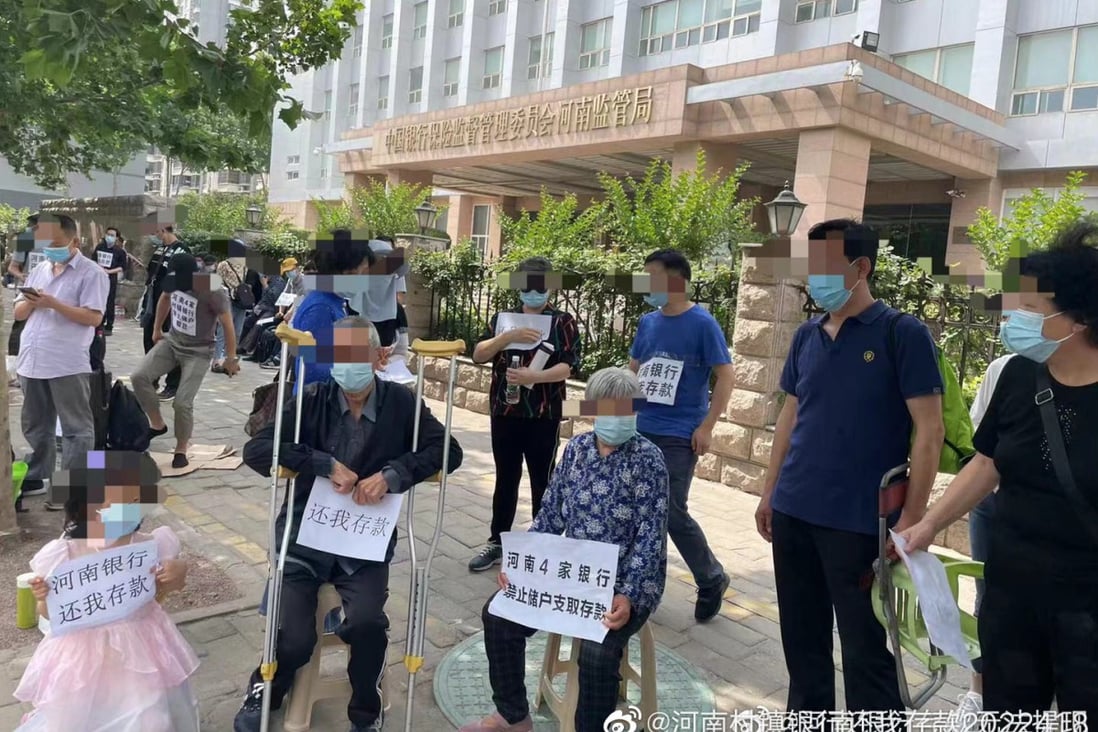
Police in central China’s Henan province have arrested a number of suspects allegedly involved in a “complicated” cash crisis involving rural banks, while investigators continue to search for the whereabouts of customers’ missing deposits.
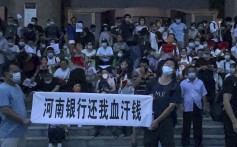
The arrests come after months of protests from anguished savers, who have been unable to withdraw cash from their accounts at small rural banks in Henan and Anhui provinces.
The case has highlighted the vulnerability of lenders in China’s less-developed regions as the risk of recession grows in the world’s second largest economy.
Police in Xuchang city, Henan, announced a breakthrough on Saturday in the banking scandal, which involves billions of yuan worth of deposits, by arresting the “first batch” of suspects and freezing related capital and assets.
The case involves long lasting crimes, numerous suspects and complicated plots
The rural banking crisis allegedly revolves around a private investment firm called Henan Xincaifu Group Investment Holding – which was controlled by a man surnamed Lu – which police began investigating in April.
Public records show the company, which had stakes in numerous rural banks and shadow companies, closed in February.
Police have accused Lu of illegally manipulating and taking advantage of online transactions at these rural banks.
“The case involves long lasting crimes, numerous suspects and complicated plots,” the police announcement said.
The case gained further publicity when victims of the financial scandal found they could not join planned protests because their health QR codes had been turned red, reigniting fears that the large-scale data collected for contact tracing is being abused.
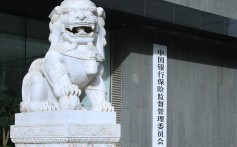
The Henan Banking and Insurance Regulatory Commission and the local Financial Supervision and Administration said authorities at all levels would closely work with the police to investigate the whereabouts of the missing funds.
China’s rural banks, which are often the key financiers for farmers and small businesses in less-developed regions, are seen as a weak link during economic downturns and are more susceptible to risks when deposits shrink and non-performing loans build up.
“Right now, the small- to medium-sized rural banks are still facing challenges when it comes to sustainable development,” said a note by Everbright Securities late last month.
“In some parts of the country, the aggregate risks are still large; it will require a bigger effort to tackle.”

The brokerage said that coronavirus outbreaks and various economic factors will bring some problems to the surface.
In April, China’s Politburo, the centre of power within the Communist Party, stressed the need to control systemic risks to the economy and financial sector.
Beijing has launched a crackdown on corruption in the nation’s financial sector, which has ensnared high-profile officials at financial institutions and regulatory agencies.
Cai Esheng, the former deputy chairman at the banking regulator who retired in 2013, was arrested in February on charges of abuse of power.

Comments
Post a Comment