Commentary: Why Trump’s blockade in Strait of Hormuz may be an astute tactical move in push for deal
https://www.channelnewsasia.com/commentary/us-iran-strait-hormuz-blockade-toll-talks-6055796
Commentary: Why Trump’s blockade in Strait of Hormuz may be an astute tactical move in push for deal
Control of the critical waterway is the only leverage Iran has left in this war, says former diplomat Lawrence Anderson from the S Rajaratnam School of International Studies.
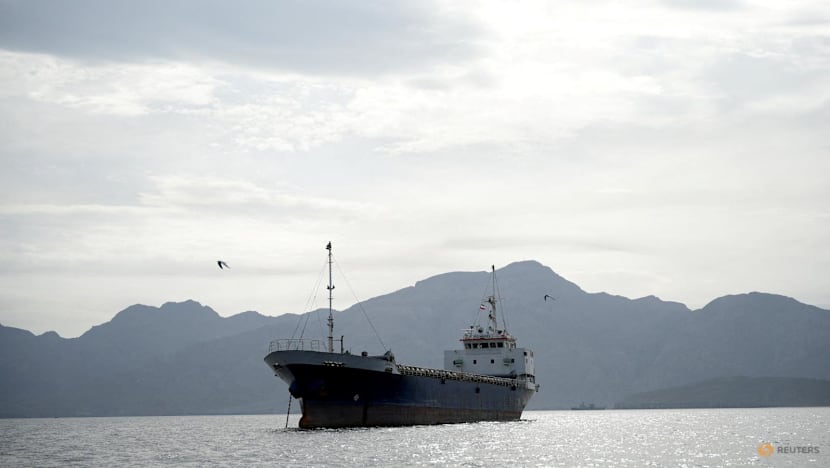
A vessel in the Strait of Hormuz, off the coast of Oman’s Musandam province on Apr 12, 2026. (File photo: Reuters)

SINGAPORE: After the failure of peace talks over the weekend, United States President Donald Trump declared that he would impose a blockade on the Strait of Hormuz.
What has come into effect since Monday (Apr 13, US time) should be understood more as a military blockade of Iranian ports. US Central Command clarified that it will not impede ships transiting the strait to and from other ports.
Control of the Hormuz Strait is the only leverage the Iranians have now. Iran has lost the war militarily, given the extent of damage to its armed forces, its drone and missile stockpiles, its political and military leadership, as well as its uranium enrichment programme.
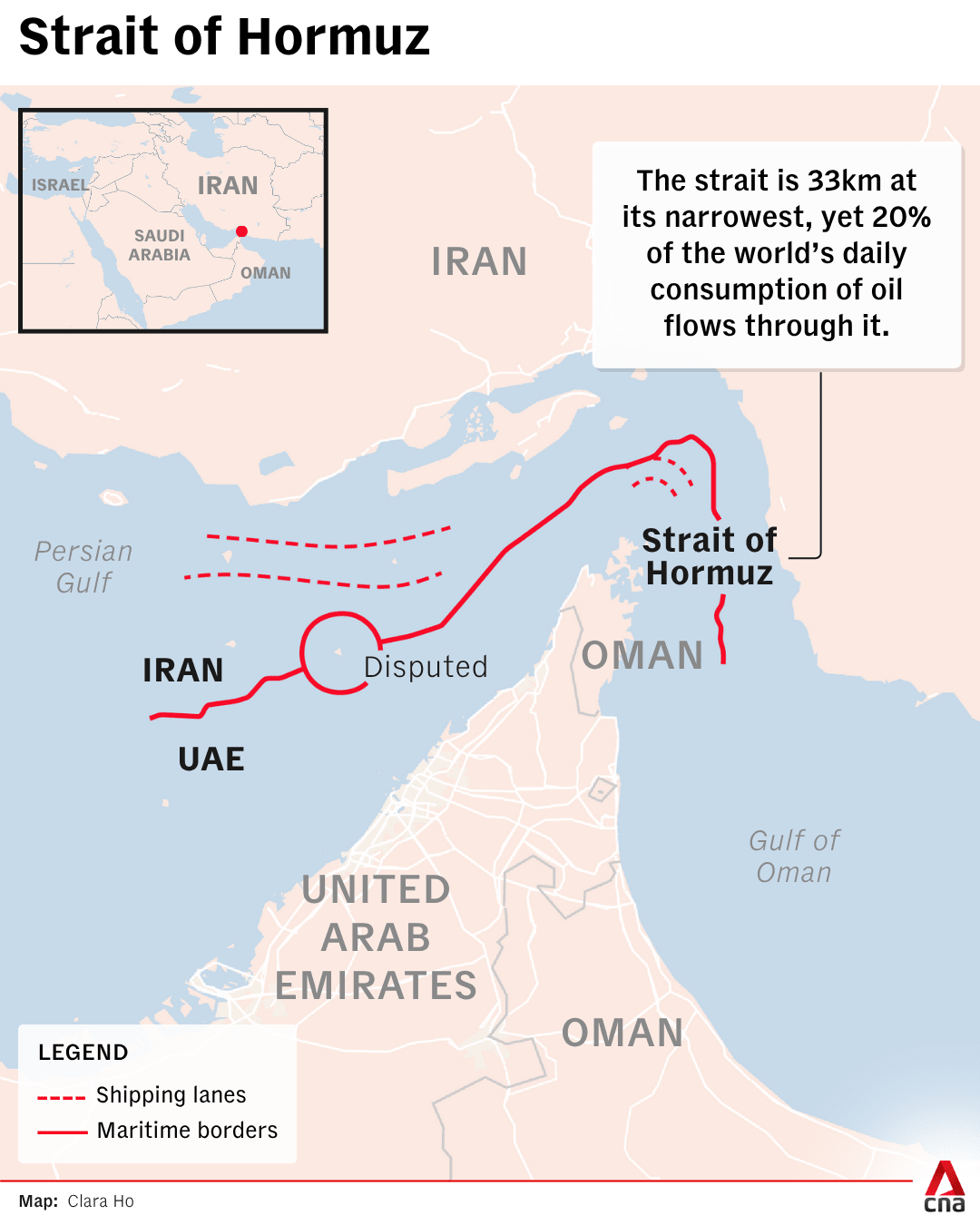
Using sea mines and the threat of attacks, Iran has declared a large stretch across the strait a “hazardous area” and effectively shut for about 20 per cent of the world’s oil and liquefied natural gas shipments. The last oil tankers to transit the strait before the war are expected to make delivery in the coming days, a pivotal moment in the deepening global energy crisis.
So could Mr Trump’s blockade actually be an astute tactical move?
REMOVING IRAN’S POWER IN THE STRAIT
If enforced effectively, the naval blockade will help the US regain the initiative from Iran’s closure of the Strait of Hormuz. It removes Tehran’s power in deciding which ships to let through, especially in extracting fees in exchange for safe passage through Iranian territorial waters.
A blockade will prevent weapons and other assistance reaching Iran by sea, while also ensuring Iran is unable to pay for external support with relatively cheap oil.
In particular, the US will also try to ensure that China does not benefit from a steady flow of energy exports via the strait – Beijing is the top buyer of oil passing through the strait (nearly 40 per cent) and also the largest buyer of Iranian oil. This could serve as leverage in China-US negotiations, as the summit between Presidents Xi Jinping and Trump in May looms.
With control of the strait, Iran tried to stretch out talks, in the hope of weakening US resolve to accept a deal – one which would enable Iran to resume its nuclear ambitions and rebuild military assets.
The US, however, is determined to see that Iran agrees to tough terms or face the resumption of war. The US Navy has deployed two destroyers, drones and helicopters to clear mines in the strait. The Gulf states, as well as France and the United Kingdom are expected to join the mine-clearing operation. Despite threats to destroy the ships, Iran has not attacked them.
WIDER IMPLICATIONS OF A US BLOCKADE
But the blockade also heightens the risk of confrontation.
Iran’s attacks have spooked insurers and tankers, though relatively few have been hit and with minimal damage, while several Iranian attacks having missed their targets entirely. Despite a dwindling stock of weapons, Iran could still challenge the US blockade or launch fresh attacks on Israel or the Gulf states.
There are also fears that Iran will react to the blockade in one waterway by closing another: Iran has threatened to disrupt the Bab el-Mandeb strait that is a key entry point to the Red Sea and the Suez Canal for shipping between Asia and Europe. Already, Saudi Arabia is reportedly urging the US to end the blockade in the Strait of Hormuz for fear of retaliation on Red Sea transit.
The US blockade is likely to face opposition from countries prepared to pay fees or accept preferential treatment for being “friendly” to Iran, such as China, Russia and Iraq. Mr Trump had also threatened to interdict vessels that have paid tolls to Iran, as tolls carry the implication of recognising Iran’s right to control passage through the strait. For now, there is no confirmation that the US will intercept such vessels or clarity about what it could lawfully do to them.
Tolls and exercise of authority over international waterways are illegal and infringe the United Nations Convention of the Law of the Sea (UNCLOS). The fact is, no country has the right to restrict passage, transit rights, insist on prior permission or collect fees in international waterways. This applies not only to the Strait of Hormuz but also the Straits of Malacca and Taiwan, and the South China Sea.
Foreign Minister Vivian Balakrishnan in Parliament and other political leaders have eloquently elucidated why Singapore will not compromise on its firm stand that transit passage is an international right that cannot be negotiated.
AT WHAT PRICE VICTORY?
Iran and the US hold irreconcilable differences: Iran’s nuclear programme is seen by Tehran as an indispensable guarantee of regime survival, but as an existential threat by Washington. Collecting tolls in the Strait of Hormuz is seen as a way to fund this.
So even if the ceasefire does not break down entirely, conflict is inevitable unless one side backs down.
The blockade could push Iran to a point of making more concessions about its nuclear programme. During the failed weekend negotiation, Iran had already been prepared to suspend its nuclear activity for up to five years, in a counterproposal to the 20 years sought by the US. Iran's Foreign Minister Seyed Abbas Araghchi in an X post on Monday, before the blockade started, said that Tehran had been “just inches away” from an agreement with the US.
A Reuters report since then suggests that US and Iran could resume peace talks this week.

Militarily, the US could probably maintain the blockade for a long time, but it cannot do so politically, given the mounting domestic opposition to the war and the approach of the mid-term elections.
What have both sides achieved? For Iran, a pyrrhic victory, it still stands – but in ruins, its economy devastated. For America, it has successfully halted Iran’s nuclear and regional ambitions by a decade or more, but it has not achieved the strategic result of neutralising Iran permanently. It effected leadership change, but possibly to a more radical regime infused with fresh hatred and notions of revenge.
Nearly seven weeks since the first US-Israeli strikes hit Iran, it is still too soon to declare “victory” or “defeat” for either side. The final chapters of this war are still being written. Meanwhile, the US blockade appears to have forced Iran back to the table with a weakened position – but expect that negotiations and conflict will exist side by side.
Lawrence Anderson is a former Singapore diplomat and Senior Fellow at the S Rajaratnam School of International Studies (RSIS), Nanyang Technological University (NTU), Singapore.
Comments
Post a Comment