M'sian woman dies, leaves behind 3 adult sons with disabilities 'incapable of self care', MP calls it his 'most complex' case
https://mothership.sg/2026/06/malaysia-woman-dies-leaves-behind-3-sons/
With the help of the State Health Director and the Director of the hospital, Hospital Bahagia Ulu Kinta has agreed to take care of them.
M'sian woman dies, leaves behind 3 adult sons with disabilities 'incapable of self care', MP calls it his 'most complex' case
"What happens when a family falls between every available category of care?"


June 16, 2026, 07:22 PM

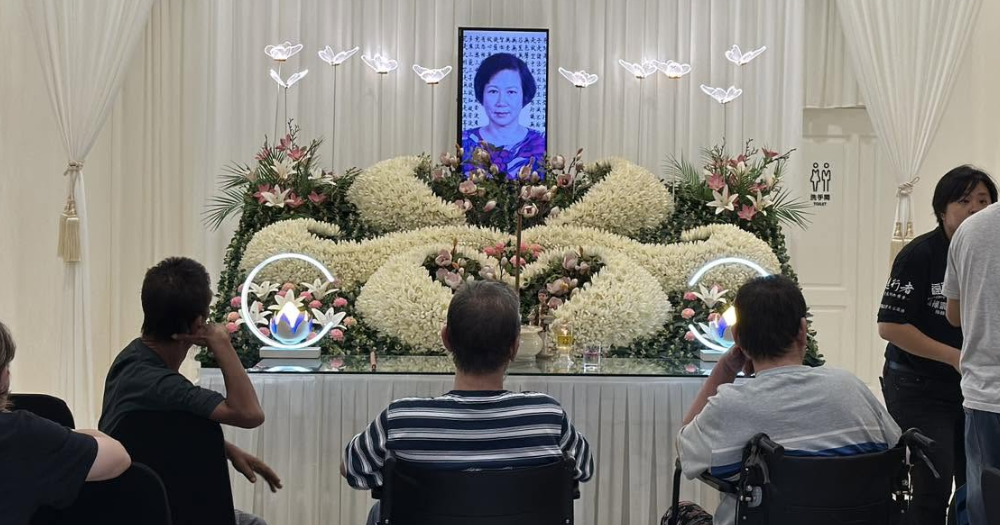
Photo from Howard Lee 李存孝/Facebook


A Malaysian woman passed away at 81, but left behind three adult sons with disabilities, two of whom are "certified under mental disability".
With their sole caretaker gone, government services now have to find long-term care solutions for them.
Malaysian MP Howard Lee recounted this tragedy in a Facebook post, and the complex web of welfare, medical help, and long-term care that authorities are still sifting through.
The brothers
The situation first came to the Welfare Department's attention when a member of the public informed them that the mother had been admitted to hospital.
Lee said when the mother, the sole caregiver for the three men, passed away on Jun. 12, they needed to come up with a solution for her three sons.
He said that they are unable to take care of themselves, "not even in the slightest way".
"Without their mother, it is unthinkable what would happen to them. Their living conditions since their mother’s hospitalisation have been absolutely untenable. This has been confirmed by several visits by our office, the Welfare Department, and officials from the Ministry of Health."
He said that among the three brothers, one has been diagnosed with schizophrenia, while another has an undisclosed psychiatric condition. The middle brother suffers from severe learning difficulties.
He noted that with the funeral arrangements having been taken care of, they now have to solve the more complex issue of their long-term care.
Limitations of the system
Lee said for the first time in his 14 years of public service, he has not been able to find a workable solution for "a whole family facing impending doom".
With their mother now gone, the three brothers have no distant relatives to care for them.
Although government-backed welfare care facilities can take responsibility for the brother with learning difficulties, they are legally unable to take the other two due to scope and capacity limitations.
For the brother with learning disabilities, Lee is confident that a private home with an available bed would be willing to accept him.
The other two brothers with more severe issues would need a facility to care for them, as they are less mobile and need psychiatric assessment and treatment.
With the help of the State Health Director and the Director of the hospital, Hospital Bahagia Ulu Kinta has agreed to take care of them.
But Lee lamented that this leads to a more complex problem.
"But do we separate the brothers? Do we have a choice?"
Lee said that besides this, then begs the issue of coverage beyond their current situations.
"What happens when a family falls between every available category of care?"
The bigger picture
Lee then pointed out the gap that existed within these welfare systems.
"If one ministry can care for one brother, and another system can assess the other two, who is responsible for the family as a whole? If hospital care is short-term, where do they go after assessment and stabilisation? If welfare homes cannot take mental disability cases, and psychiatric facilities cannot become long-term social care homes, where does a person go when he is too ill for welfare but too socially abandoned for discharge?"
He said that for persons with mental disabilities who require long-term care with no family support, there needs to be a "clear pathway" for financial coverage and inter-agency case management.
"What happens to people with mental disability when their ageing parents die? Must every such family wait until crisis, death, hospitalisation and desperation before the state can see them?"
Lee urged that all relevant agencies must address this blind spot.
"We need facilities that do not force human beings into artificial categories just because our laws and institutions were designed in separate rooms."
He ended his post with this question: "How many more families must fall before the system admits that the cracks are real?"
Comments
Post a Comment