https://www.channelnewsasia.com/singapore/prime-minister-mp-president-salary-review-6366811
CNA Explains: How Singapore reviews and benchmarks political salaries
The salaries of Singapore’s political office holders and parliamentarians have remained unchanged since 2011.
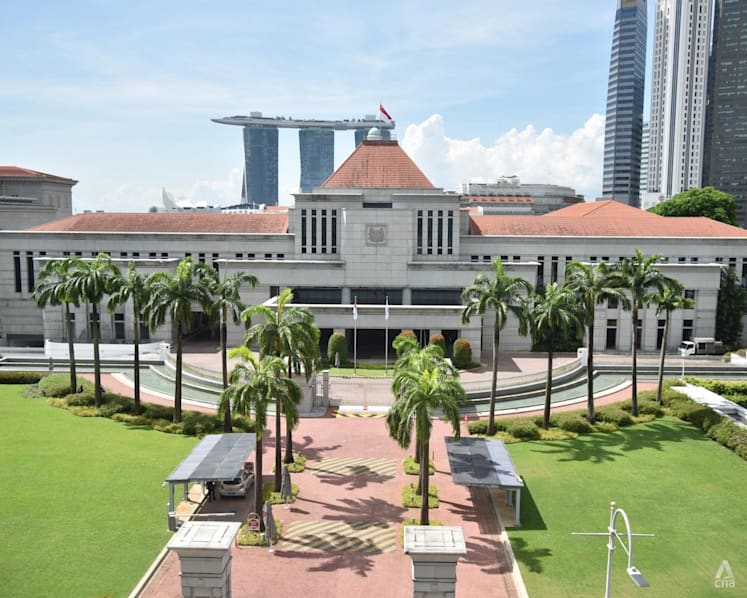
A view of Parliament House in Singapore. (File photo: CNA/Syamil Sapari)

SINGAPORE: The review of Singapore’s political salaries will be addressed in parliament on Tuesday (Sep 8), with Prime Minister Lawrence Wong and Coordinating Minister for Public Services Chan Chun Sing delivering the government's response on the matter.
Political salaries are reviewed by an independent committee that is appointed once every five years, but there has been no change to how much ministers and parliamentarians are paid since 2011.
The last review was completed in 2017 with the government deciding not to implement any changes, while a review slated for 2023 was deferred due to prevailing global circumstances.
The political salaries framework covers the salaries of the president, prime minister, speaker of parliament, deputy speaker of parliament, members of parliament (MPs), non-constituency MPs, nominated MPs and political appointment holders.





CNA looks at how the salaries are calculated and benchmarked against the private sector, and why past recommendations to raise them were not taken up.
How are political salaries calculated?
The political salary formula contains both fixed and variable pay components:
- A fixed component of 13 months
- An annual variable component, typically set at one month
- An individual performance bonus, set at three months for good performance
- A national bonus, set at three months if targets are met.
If all the boxes are ticked, the political appointment holder could receive an annual salary of 20 months.
The benchmark for an entry-level minister is based on the median income of the top 1,000 Singaporean income earners. A 40 per cent discount is applied to reflect the ethos of sacrifice that political service involves.
An entry level minister is appointed at a grade of MR4, and can also be appointed to more senior grades of MR3, MR2 and MR1 subsequently.
A minister may start out at the lower end of the MR4 range with a monthly salary of S$46,750. This works out to an annual salary of S$935,000, of which the fixed component is S$607,750 and the rest is variable.
The monthly salary at the benchmark level is S$55,000, which comes up to an annual salary of S$1.1 million. The fixed component is S$715,000 and the rest is variable.
Meanwhile, the national bonus is based on four socio-economic indicators, weighted equally: The real median income growth rate of the average Singaporean, the real income growth rate of the lowest 20th percentile of Singaporean income earners, the unemployment rate of Singaporeans and the real gross domestic product (GDP) growth rate.
How much do the prime minister and president earn?
The president, prime minister, parliamentary speaker and deputy speakers are on fixed salary points which are set at pre-determined ratios to the MR4 salary, reflecting their roles and responsibilities.
For instance, the prime minister earns twice the salary of an MR4 minister, or S$2.2 million. There is no one to decide on the performance bonus for the prime minister, so his bonus is based only on the national bonus.
The president receives the same monthly salary as the prime minister, including the 13th month fixed component, as well as the annual variable component but without the performance and national bonuses. This works out to S$1.54 million.
While the president is the head of state and has significant custodial powers, he or she does not set national policies and does not have direct executive responsibility for governing the country unless in relation to the custodial role.
Political appointment holders receive only one pay package regardless of the number of appointments they hold.
Guiding principles for the salary framework also include the view that salaries must be competitive so that people of the right calibre are not deterred from stepping forward to lead the country, and that there should be a “clean wage” with no hidden perks.
How has the formula changed over the years?
There were no formal ministerial salary benchmarks before 1994, and they were decided through informal comparisons with the private sector.
The benchmarks took the average of the top four earners in six professions or sectors – bankers, accountants, engineers, lawyers, local manufacturers and multinational corporations – and targeted two-thirds of that amount.
The formula was revised in 2000, expanding the reference pool to the top eight earners from the six professions.
Following economic downturns in November 2001 and July 2003, ministers took wage cuts, which were restored later in July 2004 and January 2005, alongside those for civil servants.
A salary revision was made in 2007 to narrow the gap between the benchmark and actual salaries, and to also include the imputed value of pensions.
During the 2009 recession from the global financial crisis, ministerial salaries were reduced by 22 per cent, in accordance with the formula.
Following the May 2011 General Election, Prime Minister Lee Hsien Loong appointed a committee to review the salaries for the president, prime minister, political appointment holders and Members of Parliament, to ensure that the salary framework remains relevant for the future.
In its public consultations, the committee received over 500 emails and letters from MPs and the public, including young people, CEOs, small and medium enterprise owners, retirees, overseas Singaporeans, professionals, academics and non-governmental organisations.
It completed and submitted its report on Dec 30, 2011, with the government accepting all recommendations and applying it as the new basis retrospectively from May 21 that year.
The white paper titled “Salaries for a Capable and Committed Government” was later endorsed in parliament in January 2012, after a debate lasting two and a half days, with 29 MPs speaking on the matter, including seven from the opposition.
It expanded the benchmark pool to the current number of 1,000 individuals, and limited it to only Singaporeans working in Singapore.
The new benchmark meant cuts to political salaries. Including the removal of pension, a minister's annual salary dropped 37 per cent to S$1.1 million and the prime minister's annual salary fell by 36 per cent.
Why were there no changes to salaries since 2011?
One recommendation from the 2011 report was for the prime minister to appoint a committee every five years to review the salary framework.
In 2017, the review committee recommended adjusting salary levels to match updated benchmarks, but the government decided against any changes as the economy was still in transition.
A review slated for 2023 was deferred due to the uncertain external environment and the downside risks in the global economy at that time.
“In 2023, the global geopolitical situation has become more uncertain, with conflicts in the Middle East and Ukraine and continuing heightened geopolitical contestation,” said Mr Chan in parliament in January 2024.
“On the economic front, significant uncertainties and downside risks in the global economy remain, impacting our local economy and our wage and inflation outlooks.
“Hence, we decided to focus on dealing with these key challenges at hand and defer the review of political salaries for now.”
In January this year, Mr Chan said that the deferred review of political salaries will be carried out, in response to a parliamentary question.
“The salary structure and benchmark have not been updated since they were introduced in 2012. It is therefore timely to undertake a review,” he said in a written reply.
The committee was chaired by Mr Gan Seow Kee, chairman of Singapore LNG Corporation and alternate member of the Council of Presidential Advisers, Mr Chan had said.
Later in May, Mr Chan said the independent committee had completed its work, but the government decided to defer consideration of its recommendations due to the geopolitical situation.
In a written reply to a parliamentary question, he said that the government recognises that the Middle East conflict is still ongoing and causing major economic uncertainties for Singapore.
“Against this backdrop, the government has decided to defer consideration of the committee’s recommendations, until the impact of the conflict on Singapore is clearer.”
He added then that the government will release the committee’s report together with its response “at the appropriate time”.
Want an issue or topic explained? Email us at digitalnews@mediacorp.com.sg. Your question might become a story on our site.
Comments
Post a Comment