https://news.theonlinecitizen.com/2026/10/08/judge-flags-shell-company-pattern-as-tenant-s-bid-to-block-kembangan-eviction-fails
Judge flags shell company pattern as tenant's bid to block Kembangan eviction fails
A District Court has dismissed a bid by Noranth Ventures to stop an elderly couple reclaiming their Kembangan home. The judge found no rent had been paid since June 2026, and said Anthony Thomas Price had used shell companies to rent landed homes without paying.
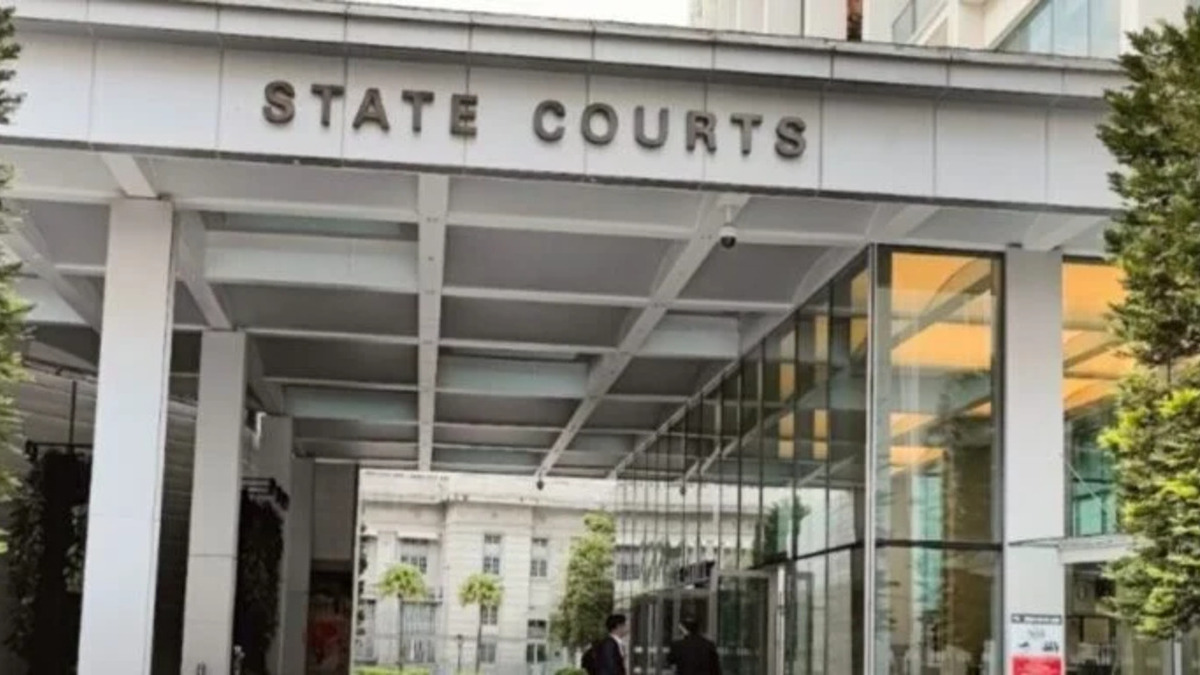

A District Court has dismissed a bid by a company linked to American citizen Anthony Thomas Price to stop an elderly couple from reclaiming their Kembangan home. The court found the tenant had paid no rent since June 2026.
In a judgment dated 7 October 2026, District Judge Chiah Kok Khun described the applications filed by Noranth Ventures Pte Ltd as "factually and legally wholly without basis" and filed "in plain abuse of process of the court".
The judge allowed the landlords' counterclaim for possession of the house, rent arrears and double rent.
The judgment also set out what the court described as a pattern of Price using shell companies to rent landed homes in Singapore. In these cases, little or no rent was paid and landlords were drawn into litigation while his family remained in occupation.
A two-year lease at S$7,500 a month
The landlords, Loo Kin Ben and Tong Pek Eng, are a couple in their eighties who own 7A Lengkong Dua, a semi-detached house in Kembangan.
On 27 April 2026, they signed a tenancy agreement with Noranth Ventures for a two-year term from 1 May 2026 to 30 April 2028, at a monthly rent of S$7,500.
According to the judgment, the company was the contracting party but Price and his family occupied the house. The company paid rent for May 2026 and nothing after that.
Noranth Ventures has a paid-up capital of S$200. The court noted that its registered address at Paya Lebar Square is a virtual office run by VOffice Singapore.
Its directors are Price, Lizzy Hashim Price and Michael Blaine Evanoff. Price and Lizzy Hashim Price are its two shareholders. Price obtained a court order to act on the company's behalf instead of appointing lawyers.
Tenant sought to block re-entry
After the couple moved to reclaim the property, the company filed an originating application and a summons at the same time. Both sought an interim injunction to stop the landlords from peaceably re-entering the premises.
The landlords had attempted re-entry on 29 June 2026. The court heard that this failed because Price and his family members resisted.
The couple opposed the applications and filed a counterclaim on 14 August 2026. They were represented by Brendan Tan Zi Jian of Rajah & Tann Singapore LLP.
"Hollow" reasons for non-payment
District Judge Chiah found it undisputed that the company had stopped paying rent from June 2026, while Price and his family continued to live in the house.
On 12 June 2026, Price told the estate agent, Allan Lee, by WhatsApp that he "would certainly consider making the outstanding payment". He set a condition: that the first defendant show "a clear willingness" to continue the tenancy.
In a letter to the landlords' lawyers on 21 June 2026, Price said the company had "made practical proposals to regularise the rental position".
In his affidavit, Price argued that the dispute was "not a straightforward rent-only matter". He cited "approximately 35 repair, rectification or practical occupation issues" and unresolved concerns over safety, tenantability and quiet enjoyment.
The judge described these words as "hollow" and "meaningless". He said they amounted to "a roundabout way to say that Price and the claimant have no intention of paying any rent".
He noted that the agreement required rent to be paid "without deduction whatsoever". Any complaint about the condition of the property, he said, had to be pursued separately. It could not be used as an excuse to withhold rent.
Citing the High Court case of Khew Kim Kee v Sim Jo-Lin, the judge held that rent unpaid for seven days entitled the landlords to re-enter under the agreement.
He added that the landlords had resolved 32 of the 35 complaints by 8 June 2026, according to an email from the estate agent. The remaining drainage gradient works required assessment and contractor scheduling.
The court heard that the tenant changed or stopped several contractor visits, including during the Hari Raya Haji period. The judge described the landlords as "eminently accommodating".
No serious issue to be tried
An applicant for an interim injunction must first show a serious issue to be tried. Given the "plain and blatant" breach, the judge found the company did not "even cross the threshold hurdle".
Further breaches of the tenancy
The court also found the company had breached the agreement in several other ways. It paid only S$7,500 of the S$15,000 security deposit, and did not pay the balance due on 1 June 2026.
It set up its own utilities account only on 4 June 2026. It did not reimburse the landlords S$813.74 for utilities used between 1 May and 3 June 2026.
Price was not one of the four authorised occupants. However, it was undisputed that he stayed at the house whenever he was in Singapore.
The court further found that Price installed CCTV cameras without the landlords' written consent. The company also failed to take up a required servicing contract for the auto-gate.
Counterclaim allowed
The judge granted vacant possession. He noted that Price had stated on affidavit that he deliberately remained at the house to ensure re-entry could not take place.
The court allowed claims for S$22,500 in rent for June to August 2026 and S$269.17 in interest at 10 per cent a year. It also allowed S$7,500 in unpaid deposit and S$813.74 in utilities.
The landlords were also awarded S$6,999.14 as a proportionate refund of the S$8,175 agent's commission. Double rent of S$15,000 a month applies from 15 August 2026 until possession is handed over.
Price argued that factual disputes required a trial. The judge rejected this as "disingenuous" and "a further attempt to frustrate the lawful rights of the defendants".
The judge also rejected Price's contention that no valid notice was served under section 18 of the Conveyancing and Law of Property Act 1886 (CLPA). He found the provision does not apply to unpaid rent.
For the other breaches, the judge found that notice had been given. The agent sent WhatsApp messages on 8 and 9 June 2026. The landlords' lawyers sent an email on 4 August 2026 requiring the breaches to be remedied by 11 August.
Two earlier tenancy disputes
The landlords also referred the court to two earlier cases involving Price. Price sought to exclude them under the Riddick principle. The judge rejected this, noting the cases were matters of public record under the principle of open justice.
In the first case, Bundleluxe Pte Ltd, a wholly owned subsidiary of Noranth Ventures, rented a semi-detached house at Burnfoot Terrace for 2024. The judge noted it had losses of about S$1,339,642 between December 2021 and November 2023.
According to the judgment, the company paid part of the deposit and a few months' rent, then stopped, citing alleged defects. Price and his family left only on 18 March 2025, after the lease had expired.
The judge said they had stayed rent-free for close to 12 months. The owner sued Price and Bundleluxe on 10 February 2025, and that case is ongoing.
Price and Bundleluxe applied to strike out parts of the owner's claim. That application was dismissed with costs on 24 August 2026.
In the second case, District Court Suit No 412 of 2020, Noranth Ventures rented a landed home at Jalan Selamat from September 2019 at S$7,200 a month.
According to pleadings summarised by the judge, the company paid part of the deposit and about one and a half months' rent. The family lived there rent-free for at least five months. The suit was settled and discontinued.
"A matter of some concern for landlords"
The judge identified an eight-part approach. It included using a shell company to sign the lease, paying only part of the deposit, stopping rent after a short period, and citing alleged defects to justify non-payment.
Other features, he said, included refusing to move out despite demands for vacant possession, staying rent-free for extended periods, and embroiling landlords in litigation.
The landlords argued that arrears would likely go unpaid because the tenants on record were companies with minimal paid-up capital. The judge said the pattern was "a matter of some concern for landlords in Singapore".
He concluded that Price had "devised a deliberate scheme" to rent the house with no intention to pay. He found Price had used a shell company to sue the landlords and represented it himself rather than appointing solicitors.
"This is not a case with that proverbial hapless litigant in person who needed every assistance to access the courts," the judge wrote.
He said Price had used various procedural tools. These included without-notice applications, urgent injunctions, strike-out bids and orders to act for his companies, which he noted had been made easier under the Rules of Court 2021 (ROC 2021).
The guideline range for costs was S$2,000 to S$15,000. The judge fixed costs at the top of that range and ordered the company to pay S$15,000 plus S$2,031.98 in disbursements forthwith.
Comments
Post a Comment